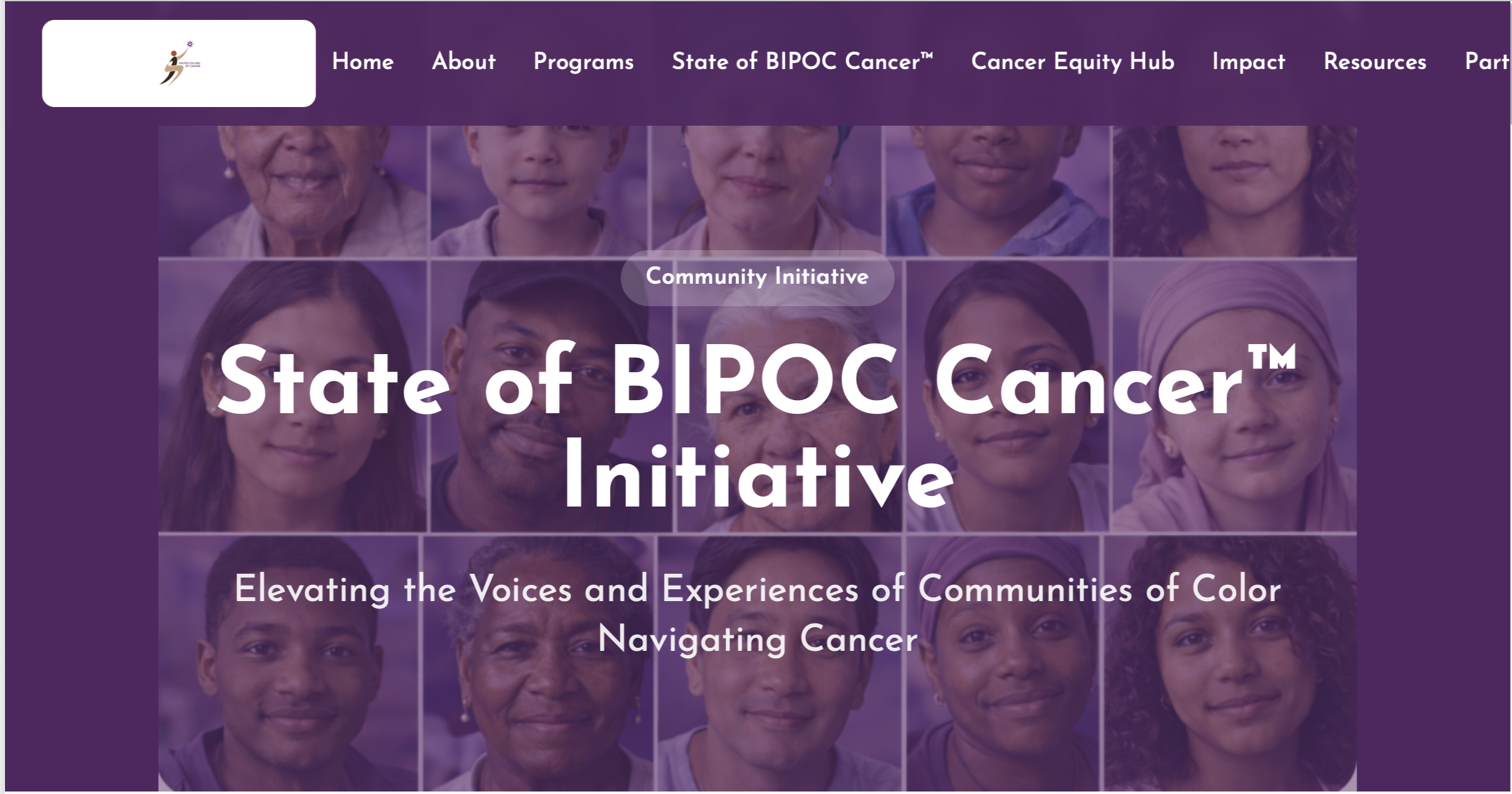
Research & Advocacy
Amplifying BIPOC voices to transform cancer research and policy
Why BIPOC Experiences Are Missing
Traditional cancer research has systematically excluded BIPOC communities, leaving critical gaps in our understanding of cancer survivorship.
Underrepresentation in Clinical Trials
Less than 5% of cancer research participants are from BIPOC communities, yet these communities face higher mortality rates for many cancer types.
Invisible Experiences
The unique challenges BIPOC survivors face—from cultural barriers to financial toxicity—are rarely captured in academic research.
Policy Built on Incomplete Data
When research excludes BIPOC voices, the policies and programs designed to help survivors fail to meet their actual needs.

The State of BIPOC Cancer Report
A first-of-its-kind community-driven research project capturing the lived experiences of BIPOC cancer survivors across the United States.
What We're Capturing
Treatment experiences, financial challenges, cultural barriers, support gaps, and survivorship needs directly from BIPOC communities.
How We'll Use It
To inform advocacy, shape policy, educate healthcare providers, and guide our programs to better serve survivors.
Why It Matters
This will become one of the largest storytelling archives of BIPOC cancer survivorship, making visible what has been invisible.
Your Voice Matters
Are you a BIPOC cancer survivor? Share your experience to help change the future of cancer research and support.
Participate in the Survey
The survey takes 15-20 minutes and covers your diagnosis experience, treatment journey, financial impact, and support needs.
Your responses are confidential and will be used to inform our State of BIPOC Cancer Report.

Early Insights from Community Voices
Preliminary findings from conversations with BIPOC survivors are already revealing critical gaps in care and support.
Financial Toxicity Is Universal
Nearly every BIPOC survivor we've spoken to has faced impossible choices between treatment and basic living expenses.
Cultural Barriers Are Real
Language, trust in medical systems, and cultural stigma around cancer create obstacles to accessing care.
Support Networks Are Crucial
Survivors consistently report that community support—not just medical treatment—was essential to their healing.
How We Advocate for Change
Research without action is incomplete. We use survivor experiences to drive systemic change in cancer care and policy.
Policy Advocacy
Working with lawmakers to create policies that address disparities in cancer care and survivorship support.
Healthcare Provider Education
Training oncologists, nurses, and healthcare systems on the unique needs and barriers BIPOC survivors face.
Research Partnerships
Collaborating with academic institutions to ensure BIPOC voices are included in future cancer research.
Community Awareness
Educating BIPOC communities about cancer prevention, early detection, and available resources.
Help Us Change Cancer Research
Every story shared brings us closer to a more equitable future